
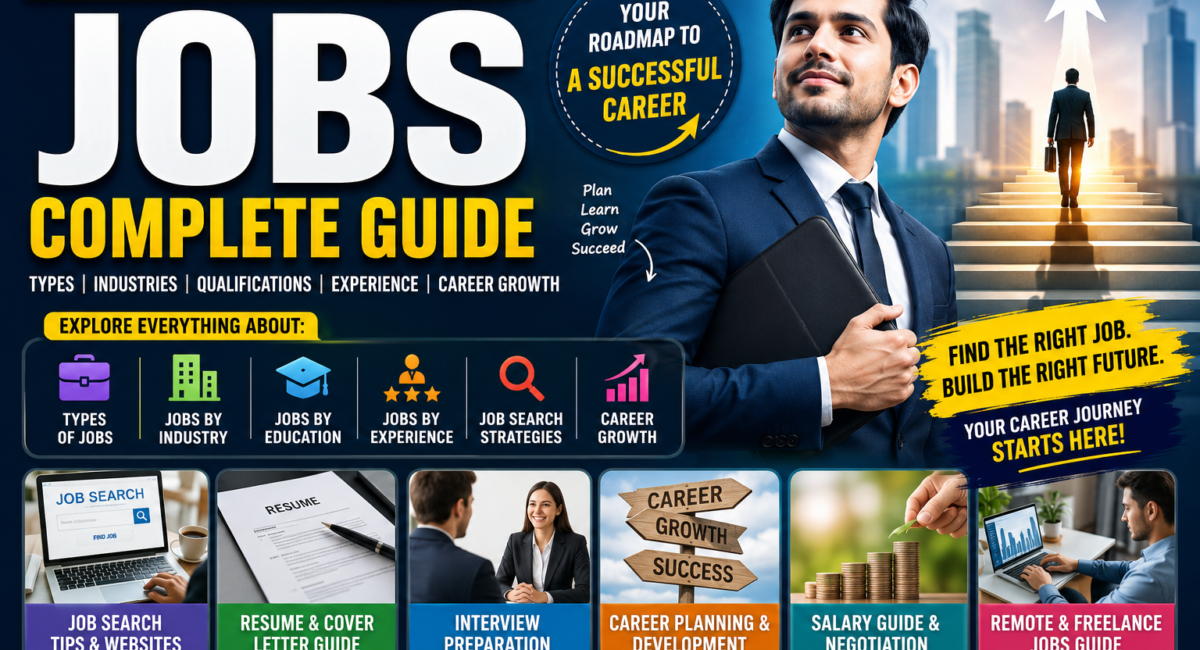
1000+ Jobs: The Ultimate Guide to Career Opportunities, Employment and Professional Growth
- Finding the Right Job Starts with Understanding the Modern Job Market
- What Are Jobs
- Why Jobs Matter
- Why This Jobs Guide Is Different
- Who Should Read This Guide
- Understanding Employment Building the Foundation for Every Career
- What Is Employment
- Why Employment Matters
- Jobs, Careers, Professions and Occupations: Understanding the Difference
- Employee vs Employer
- Employment vs Self Employment
- Types of Jobs Understanding Every Employment Option
- Full Time Jobs
- Part Time Jobs
- Contract Jobs
- Temporary Jobs
- Seasonal Jobs
- Internship Jobs
- Apprenticeship Jobs
- Freelance Jobs
- Gig Jobs
- Remote Jobs
- Hybrid Jobs
- On Site Jobs
- Choosing the Right Job Type
-
Jobs by Education and Qualifications | Choosing the Right Career Path
- Why Education Still Matters in Today Job Market
- How Qualifications Influence Career Opportunities
- Jobs After Completing Secondary Education
- Jobs After Higher Secondary Education
- Diploma Based Career Opportunities
- ITI and Vocational Careers
- Graduate Level Career Opportunities
- Postgraduate Careers
- Professional Certifications
- Education vs Skills
- Lifelong Learning
- Choosing the Right Educational Path
-
Jobs by Industry Exploring Career Opportunities Across Every Major Sector
- Every Industry Creates Different Career Opportunities
- Information Technology (IT) Jobs
- Skills Employers Value
- Health care Jobs
- Banking and Finance Jobs
- Education Jobs
- Manufacturing Jobs
- Construction and Infrastructure Jobs
- Retail Jobs
- Hospitality and Tourism Jobs
- Logistics and Supply Chain Jobs
- Marketing and Sales Jobs
- Government Jobs
- Agriculture Jobs
- Jobs by Experience Level Choosing the Right Career at Every Stage
- Mid Level Professionals
1000+ Jobs: The Ultimate Guide to Career Opportunities, Employment and Professional Growth
Finding the Right Job Starts with Understanding the Modern Job Market
A job is more than a way to earn a monthly income, It influences financial stability, personal development, career progression, life style and long term professional success, Whether someone is entering the work force for the first time, changing careers, returning after a break or looking for better opportunities, understanding today job market is the a first step toward making informed career decisions
The employment landscape has changed significantly over the past decade Businesses are adopting new technologies, industries are creating specialized roles and employers increasingly value practical skills alongside formal education, Remote work, hybrid workplaces, freelance careers, project based employment and digital hiring platforms have expanded the a way people find and perform jobs
Because of these changes, choosing a job is no longer about accepting the a first available opportunity, It requires understanding industries, employment models, required skills, career growth potential, workplace expectations and future demand
This comprehensive guide has been created to a help students, fresh graduates, experienced professionals, career changers, freelancers and job seekers understand the complete employment eco system, Instead of focusing on the a single industry or profession, this guide explores how jobs work across different sectors, qualifications, experience levels and career stages
Whether your goal is a to secure your first job, switch industries, improve your professional skills or build a long term career, this guide will provide the knowledge needed to a make better employment decisions
What Are Jobs
A job is a the structured role performed by an a individual for an employer, organization, government agency, business or client in exchange for a financial compensation or other agreed benefits, Depending on the nature of the work, compensation may include salaries, hourly wages, commissions, bonuses, incentives or contractual payments
Jobs exist in a almost every industry and economic sector, They range from entry level positions requiring minimal experience to highly specialized professional roles that demand advanced education, technical expertise, certifications or years of practical experience
Modern jobs also differ in the how work is performed, Some require employees to a work on site, while others allow remote or hybrid arrangements, Certain roles involve permanent employment, whereas others are project based, seasonal, contractual, freelance or temporary
Understanding these differences helps job seekers choose opportunities that match their skills, interests, financial goals and preferred work style
Why Jobs Matter
Employment plays a critical role in a both personal and economic development, Beyond earning an income a job creates opportunities to a develop new skills, gain practical experience build professional relationships and contribute to the society
For individuals the right job can :
- Provide financial independence
- Improve confidence and self development
- Create long term career opportunities
- Develop valuable technical and interpersonal skills
- Increase professional credibility
- Support personal and family goals
- Open pathways to leadership positions
- Encourage lifelong learning
For a businesses, skilled employees drive innovation, improve productivity and contribute to sustainable growth, At a broader level, employment strengthens economies by supporting businesses, increasing consumer spending and encouraging technological advancement
Why This Jobs Guide Is Different
Many articles discuss only one aspect of employment, such as resume writing, interview preparation or government jobs, While those topics are important, they represent only a the small part of a the overall employment journey
This guide takes a the broader approach by bringing together every major area of a the job market into one structured resource
Throughout this guide you will learn about :
- Different types of jobs
- Employment models
- Government and private sector careers
- Remote and hybrid work
- Freelancing and gig opportunities
- Jobs based on education and experience
- Industry-specific career options
- Essential workplace skills
- Recruitment and hiring processes
- Resume and interview preparation
- Career planning and long term professional growth
Rather than reading multiple disconnected articles, readers can a use this guide as a starting point for a understanding the complete employment land scape
Who Should Read This Guide
This guide is a designed for anyone interested in the understanding jobs, employment and career development, including :
- Students preparing for future careers
- Fresh graduates entering the work force
- Experienced professionals seeking career advancement
- Individuals changing industries
- Freelancers exploring new opportunities
- Remote workers
- Business owners hiring employees
- Career counselors
- Professionals returning to work after a career break
Regardless of experience level, understanding how the a employment eco system works helps individuals make the informed career decisions
Understanding Employment Building the Foundation for Every Career
Why Understanding Employment Is the 1st Step to Career Success
Most people start looking for a jobs without first understanding what employment actually means, They focus on salary, job titles or company names, but over look the broader picture of the how employment works, As a result, they often make career decisions based on the short term needs rather than long term growth
Employment is a much more than receiving a the monthly pay check, It is a professional relationship where individuals contribute their knowledge, skills and time in exchange for a financial compensation, career development and work place benefits, Understanding this a relationship helps job seekers evaluate opportunities more effectively and make informed career choices
Before exploring different job types, industries or recruitment processes, it is a important to a understand the key concepts that a form the foundation of the modern employment system
What Is Employment
Employment is a the formal or informal working arrangement in a which an individual performs agreed responsibilities for an the employer, organization, government agency, business or client in return for a financial compensation or other agreed benefits
Employment may include :
- Monthly salary
- Hourly wages
- Project based payments
- Commission-based earnings
- Performance bonuses
- Employee benefits
- Retirement contributions
- Paid leave and other work place benefits
The exact structure depends on the a type of employment, industry, organization and country
Why Employment Matters
Employment provides much more than financial income
It helps individuals :
- Build professional experience
- Develop technical and work place skills
- Improve communication and team work
- Gain financial independence
- Expand professional networks
- Create long term career opportunities
- Increase confidence through real world experience
For businesses, employment allows organizations to grow by a bringing together people with different expertise, ideas and problem solving abilities
Jobs, Careers, Professions and Occupations: Understanding the Difference
These four terms are a often used inter changeably, but they describe different aspects of working life
| Term | Meaning | Example |
|---|---|---|
| Job | A specific role performed for income | Customer Support Executive |
| Career | A long term professional journey | Growing from Executive to Operations Manager |
| Profession | A field requiring specialized education or training | Doctor, Lawyer, Chartered Accountant |
| Occupation | The general type of work a person performs | Teacher, Electrician, Software Developer |
Employee vs Employer
Every employment relationship involves, 2 primary participants
| Employee | Employer |
|---|---|
| Performs assigned work | Provides work opportunities |
| Receives salary or wages | Pays compensation |
| Follows organizational policies | Establishes work place policies |
| Develops professional skills | Supports organizational growth |
| Contributes to business objectives | Creates employment opportunities |
A successful workplace depends on the mutual trust, clear communication and shared responsibilities between both parties
Different Employment Models
Modern employment is the no longer limited to traditional office jobs, Organizations now hire people through multiple work arrangements depending on the business needs
Permanent Employment
Employees work on the a long term basis and usually receive salaries, benefits, paid leave and career development opportunities
Best suited for :
- Long term career growth
- Financial stability
- Leadership development
Contract Employment
Employees are hired for a fixed period or a specific project
Common in :
- IT projects
- Construction
- Consulting
- Engineering
Temporary Employment
Organizations hire workers to a meet short term operational needs
Examples include :
- Holiday retail staffing
- Event management
- Seasonal tourism
- Temporary office support
Freelance Employment
Freelancers work independently for a multiple clients rather than a the single employer
Popular industries include :
- Writing
- Graphic Design
- Software Development
- Digital Marketing
- Video Editing
Self Employment
Self employed professionals operate their own businesses or provide services directly to a customers
Examples :
- Shop owners
- Consultants
- Doctors with private clinics
- Independent accountants
Employment vs Self Employment
| Employment | Self Employment |
|---|---|
| Works for an employer | Works independently |
| Fixed salary | Income depends on clients or business |
| Company provides work | Individual finds customers |
| Structured working hours | Flexible working schedule |
| Lower financial risk | Higher financial responsibility |
| Career progression within an organization | Business growth depends on individual effort |
How Employment Has Evolved
Employment has changed significantly over the a past decade due to technology, globalization and changing work force expectations
Some major developments include :
- Digital recruitment platforms replacing traditional news paper listings
- Remote work becoming common across many industries
- Hybrid work models offering greater flexibility
- Growing demand for digital and AI related skills
- Continuous learning becoming essential for career advancement
- Companies hiring talent from different regions and countries
These changes have created a more opportunities while increasing competition, making skill development and adaptability more important than ever
Types of Jobs Understanding Every Employment Option
Why Understanding Different Types of Jobs Is Important
One of the biggest mistakes a job seekers make is a assuming that every job follows the a same working pattern, In reality, modern employment offers a wide range of work arrangements designed to a meet different business needs and personal preferences
Some people prefer long term job security with fixed working hours, while others value flexibility, independent work or project based opportunities, Employers also choose different employment models depending on the nature of their business, work load and work force requirements
Overview of Modern Job Types
Today jobs can be a broadly categorized into the a following employment models
| Job Type | Best For | Typical Duration | Income Stability |
|---|---|---|---|
| Full Time Jobs | Long term careers | Permanent | High |
| Part Time Jobs | Students, flexible workers | Ongoing | Moderate |
| Contract Jobs | Specialists | Fixed term | Moderate |
| Temporary Jobs | Short term work | Limited | Moderate |
| Seasonal Jobs | Peak business periods | Seasonal | Temporary |
| Internship Jobs | Students & freshers | Few months | Low to Moderate |
| Apprenticeship Jobs | Skill development | Fixed training period | Moderate |
| Freelance Jobs | Independent professionals | Project based | Variable |
| Gig Jobs | Flexible earning | Task based | Variable |
| Remote Jobs | Work from any where | Permanent/Contract | High |
| Hybrid Jobs | Flexible office schedule | Permanent | High |
| On Site Jobs | Physical work place roles | Permanent | High |
Full Time Jobs
Full time jobs are the most common form of employment Employees typically work a the standard schedule determined by the a employer and receive regular salaries along with a benefits such as paid leave, insurance, retirement contributions and career development opportunities
Advantages
- Stable monthly income
- Better career progression
- Employee benefits
- Professional training
- Promotion opportunities
- Greater job security
Challenges
- Fixed working hours
- Less flexibility
- Higher responsibility
Best For
- Long term career growth
- Financial stability
- Leadership development
Part Time Jobs
Part time jobs require fewer working hours than full time positions, These roles are common among students, parents, retirees and individuals seeking additional income
Advantages
- Flexible schedules
- Better work life balance
- Opportunity to earn while studying
- Multiple income sources possible
Challenges
- Lower overall income
- Limited employee benefits
- Slower career progression in some industries
Best For
- Students
- Career starters
- Individuals seeking flexible work
Contract Jobs
Contract employees are hired for a the specific period or project, Once the contract ends, it may be a renewed based on the business requirements
Common industries include :
- Information Technology
- Engineering
- Construction
- Consulting
- Finance
Advantages
- Higher project based compensation
- Diverse work experience
- Opportunity to work on specialized assignments
Challenges
- Limited long term security
- Contract renewal depends on business needs
Temporary Jobs
Temporary jobs help organizations manage short term staffing requirements
Examples include :
- Office support during employee leave
- Event management
- Festival retail staffing
- Warehouse operations
- Data entry projects
These positions provide valuable experience and can a sometimes lead to permanent employment
Seasonal Jobs
Certain industries require additional employees only during specific periods of the a year
Examples include:
- Tourism seasons
- Holiday retail sales
- Agricultural harvesting
- Festival logistics
- Tax preparation periods
Seasonal work is suitable for individuals looking for a temporary earning opportunities
Internship Jobs
Internships provide practical work place experience before entering full time employment
Interns learn:
- Professional communication
- Work place etiquette
- Industry specific skills
- Team collaboration
- Real world problem solving
Many organizations use internship programs to identify future full time employees
Apprenticeship Jobs
Apprenticeships combine practical training with a structured learning, Participants develop hands on experience while learning directly from experienced professionals
Common sectors include :
- Manufacturing
- Electrical
- Plumbing
- Construction
- Automotive
- Engineering
Apprenticeships help a individuals build industry recognized skills before taking on permanent roles
Freelance Jobs
Freelancers work independently and provide services to multiple clients instead of working for one employer.
Popular freelance careers include:
- Content Writing
- Graphic Design
- Video Editing
- Software Development
- Web Design
- Digital Marketing
- Translation
- Consulting
Advantages
- Flexible schedule
- Freedom to choose projects
- Global client opportunities
- Income growth based on expertise
Challenges
- Irregular income
- Client acquisition responsibility
- Self management required
Gig Jobs
Gig work involves completing individual tasks, short projects or on demand services rather than long term employment.
Examples include :
- Food delivery
- Ride sharing
- Home services
- Task based digital work
- Local service platforms
Gig jobs provide flexibility but usually do not include traditional employee benefits
Remote Jobs
Remote jobs allow employees to work outside a the traditional office using internet based communication and collaboration tools
Many remote professionals work from :
- Home offices
- Co working spaces
- Different cities
- Different countries
Benefits
- Flexible location
- Reduced commuting
- Better work life balance
- Access to global employers
Hybrid Jobs
Hybrid work combines office work with remote work
Employees may the spend certain days at the a office while working remotely on a other days
This model offers a flexibility while maintaining in person collaboration when necessary
On Site Jobs
On site jobs require employees to work at a physical work place
Examples include:
- Manufacturing
- Healthcare
- Hospitality
- Construction
- Retail
- Transportation
These roles often involve direct interaction with equipment, customers or operational facilities
Choosing the Right Job Type
The best employment model depends on a several factors
Consider :
- Career goals
- Financial requirements
- Work life balance
- Industry demand
- Skill level
- Preferred work environment
- Learning opportunities
- Long term stability
There is no universally best job type, The right choice depends on your individual priorities and stage of your career
Jobs by Education and Qualifications | Choosing the Right Career Path
Why Education Still Matters in Today Job Market
Education remains one of the most best important factors in the career development, but it is no longer the only factor that employers consider Modern organizations evaluate candidates based on is a combination of academic qualifications, practical skills, professional certifications, work experience, communication abilities and willingness to learn
A higher qualification may open the door to more opportunities, but long term career success depends on the how effectively individuals apply their knowledge in real world situations, Many industries now value continuous learning, technical expertise and problem solving abilities alongside formal education
For jobs seekers, understanding how different qualifications influence career opportunities makes it a easier to choose realistic career paths and plan future growth
How Qualifications Influence Career Opportunities
Educational qualifications often determine the minimum eligibility for many roles, However they should be viewed as a the starting point rather than is a final destination
Employers commonly consider :
- Educational background
- Technical knowledge
- Practical experience
- Industry certifications
- Communication skills
- Digital literacy
- Team work
- Adaptability
- Professional attitude
Candidates who combine education with practical skills generally have is a stronger profile in the competitive hiring processes
Jobs After Completing Secondary Education
Many industries offer entry level opportunities for a individuals who wish to start working after completing school
Typical opportunities may exist in sectors such as :
- Retail
- Customer service
- Hospitality
- Logistics
- Manufacturing
- Warehouse operations
- Delivery services
- Field support
- Administrative assistance
These roles often a provide valuable work place experience while allowing employees to a continue learning or pursue additional qualifications
Jobs After Higher Secondary Education
Completing higher secondary education expands career opportunities in a both private organizations and skill based industries
Common employment areas include :
- Sales
- Office administration
- Customer support
- Hospitality
- Retail management
- Business process services
- Logistics
- Health care assistance
Many people also begin professional certification programs or a vocational training at this stage
Diploma Based Career Opportunities
Diploma programs focus on the practical and technical education, preparing students for industry specific careers
Popular diploma fields include :
- Mechanical Engineering
- Civil Engineering
- Electrical Engineering
- Electronics
- Computer Science
- Automobile Technology
- Hotel Management
- Fashion Design
Diploma graduates often enter technical roles a that emphasize hands on knowledge and operational skills
ITI and Vocational Careers
Industrial training and vocational education prepare candidates for the specialized technical work
Common career areas include :
- Electrician
- Fitter
- Welder
- Mechanic
- Plumber
- Carpenter
- Machine Operator
- Refrigeration Technician
- CNC Operator
Many industries value vocational professionals because of their practical expertise and a ability to perform technical tasks efficiently
Graduate Level Career Opportunities
A bachelor degree provides access to a the wider range of professional careers across different industries
Graduates may find opportunities in :
- Information Technology
- Banking
- Finance
- Marketing
- Human Resources
- Education
- Health care Administration
- Media
- Sales
- Business Operations
- Consulting
Employers often combine educational qualifications with internships, projects, certifications and practical skills during recruitment
Postgraduate Careers
Advanced degrees can a prepare professionals for specialized, research oriented, technical or leadership roles
Common postgraduate career paths include :
- Senior Management
- Research
- University Teaching
- Data Analytics
- Artificial Intelligence
- Financial Consulting
- Public Administration
- Corporate Strategy
- Health care Management
Higher education may also improve opportunities for career advancement in certain industries
Professional Certifications
Professional certifications help candidates demonstrate specialized knowledge beyond formal education
Popular certification areas include :
- Project Management
- Cloud Computing
- Cyber security
- Data Analytics
- Accounting
- Digital Marketing
- Human Resources
- Networking
- Software Development
- Business Analysis
Certifications are especially valuable when combined with practical experience
Education vs Skills
One of the biggest changes in today hiring environment is the growing importance of skills
| Education | Skills |
|---|---|
| Demonstrates academic learning | Demonstrates practical ability |
| Earned through schools and universities | Developed through practice and experience |
| Usually completed over several years | Can be improved continuously |
| Often required for eligibility | Often determines workplace performance |
| Provides theoretical knowledge | Supports real world problem solving |
Lifelong Learning
Career development does not stop after a graduation
Professionals who continue learning often gain advantages through :
- Industry certifications
- Work shops
- Online learning
- Professional networking
- Technical training
- Leadership development
- Communication improvement
- Digital skills
Continuous learning helps individuals remain competitive as a industries evolve
Choosing the Right Educational Path
When planning your career, consider :
- Personal interests
- Industry demand
- Required qualifications
- Skill requirements
- Career growth potential
- Future employment trends
- Learning opportunities
- Long term goals
Avoid choosing a qualification solely because it is popular Instead, focus on building knowledge and skills that align with your strengths and a career objectives
| Qualification Level | Typical Career Focus | Growth Potential |
|---|---|---|
| Secondary Education | Entry Level Roles | Moderate |
| Higher Secondary | Administrative & Service Roles | Moderate |
| Diploma | Technical Careers | High |
| ITI / Vocational | Skilled Trades | High |
| Bachelor Degree | Professional Careers | High |
| Postgraduate Degree | Specialized & Leadership Roles | Very High |
| Professional Certifications | Skill Enhancement | High |
Jobs by Industry Exploring Career Opportunities Across Every Major Sector
Every Industry Creates Different Career Opportunities
One of the biggest misconceptions among job seekers is a that all industries offer similar career paths In reality, every industry has its own hiring requirements, work environment, salary structure, growth opportunities and skill expectations
Some industries focus heavily on a technical expertise, while others prioritize communication, customer service, leader ship, creativity or analytical thinking Understanding how industries differ help job seekers choose careers that match both their interests and long term professional goals
The modern economy depends on thousands of businesses operating across different sectors, Each sector creates employment opportunities for a professionals with different educational backgrounds, experience levels and technical abilities
Rather than asking, Which job pays the most a better question is :
Which industry matches my skills, interests and long term career goals
That single decision often has a the greater impact on career satisfaction than salary alone
Information Technology (IT) Jobs
The Information Technology it industry continues to create opportunities for professionals in software development, cloud computing, cyber security, artificial intelligence, networking, technical support and digital infra structure
Common career paths include :
- Software Developer
- Web Developer
- Mobile App Developer
- Data Analyst
- Data Scientist
- Cybersecurity Analyst
- Cloud Engineer
- DevOps Engineer
- Network Administrator
- Database Administrator
- Technical Support Engineer
- UI/UX Designer
- AI Engineer
- Machine Learning Engineer
Skills Employers Value
- Programming
- Problem Solving
- Database Knowledge
- Cloud Platforms
- Cyber security
- Team Collaboration
Health care Jobs
Health care is one of the best world largest employment sectors and continues to grow as populations increase and medical services expand
Career opportunities include:
- Doctor
- Nurse
- Pharmacist
- Physiotherapist
- Medical Laboratory Technician
- Radiology Technician
- Health care Administrator
- Nutritionist
- Clinical Research Associate
- Emergency Medical Technician
Health care careers often require specialized education, professional licensing and continuous learning
Banking and Finance Jobs
Banks, financial institutions, insurance companies and investment firms employ professionals across many business functions
Popular careers include :
- Bank Officer
- Relationship Manager
- Financial Analyst
- Accountant
- Auditor
- Investment Advisor
- Loan Officer
- Risk Analyst
- Tax Consultant
- Insurance Advisor
Strong analytical and numerical skills are a highly valuable in this industry
Education Jobs
Education extends far beyond class room teaching
Career opportunities include :
- School Teacher
- College Lecturer
- Professor
- Academic Counselor
- Educational Consultant
- Curriculum Developer
- Instructional Designer
- Online Tutor
- School Administrator
- Education Coordinator
Digital learning has also expanded opportunities for online educators worldwide
Manufacturing Jobs
Manufacturing supports industries ranging from auto mobiles to electronics, consumer goods, pharmaceuticals and heavy engineering
Common positions include :
- Production Engineer
- Quality Inspector
- Machine Operator
- Maintenance Technician
- Production Supervisor
- Plant Manager
- Supply Chain Coordinator
- Industrial Engineer
Automation has increased demand for technically skilled professionals
Construction and Infrastructure Jobs
Construction remains one of the a largest employers worldwide
Career options include :
- Civil Engineer
- Site Engineer
- Architect
- Surveyor
- Construction Manager
- Structural Engineer
- Safety Officer
- Project Coordinator
- Quantity Surveyor
Infrastructure development continues to a create long term employment opportunities
Retail Jobs
Retail businesses employ millions of people across physical stores and online e commerce
Typical careers include :
- Sales Associate
- Store Manager
- Cashier
- Inventory Executive
- Customer Service Executive
- Merchandising Specialist
- Retail Operations Manager
Customer communication skills are especially important
Hospitality and Tourism Jobs
Hotels, restaurants, travel companies, resorts, airlines and tourism organizations provide diverse employment opportunities
Popular roles include :
- Hotel Manager
- Chef
- Front Office Executive
- Restaurant Manager
- Travel Consultant
- Tour Guide
- Event Coordinator
- Housekeeping Supervisor
Excellent customer service plays a major role in the career success
Logistics and Supply Chain Jobs
The movement of goods across countries has created strong demand for logistics professionals
Career options include :
- Supply Chain Analyst
- Warehouse Manager
- Logistics Coordinator
- Procurement Officer
- Inventory Planner
- Transportation Manager
- Distribution Supervisor
Global trade continues to expand opportunities in this field
Marketing and Sales Jobs
Every organization depends on the marketing and sales to reach customers
Common careers include :
- Digital Marketing Specialist
- SEO Specialist
- Content Marketer
- Brand Manager
- Sales Executive
- Business Development Manager
- Market Research Analyst
- Social Media Manager
Professionals with communication and analytical skills often perform well in a these roles
Government Jobs
Government organizations recruit professionals for a administration, public services, education, health care, engineering, law enforcement, defense, transportation and many other departments
Government employment is often valued for :
- Stable careers
- Structured promotion systems
- Retirement benefits
- Public service opportunities
Recruitment procedures vary depending on the a department and position
Agriculture Jobs
Agriculture has evolved into a technology driven industry with careers extending beyond traditional farming
Career opportunities include :
- Agricultural Officer
- Agronomist
- Horti culture Specialist
- Food Processing Executive
- Irrigation Engineer
- Farm Manager
- Agricultural Researcher
- Agribusiness Consultant
Modern agriculture increasingly integrates technology, sustainability and supply chain management
| Industry | Growth Potential | Skill Demand | Career Diversity |
|---|---|---|---|
| Information Technology | Very High | Very High | Excellent |
| Healthcare | High | High | Excellent |
| Banking & Finance | High | High | High |
| Education | High | Moderate | High |
| Manufacturing | High | High | High |
| Construction | High | Moderate | High |
| Retail | Moderate | Moderate | High |
| Hospitality | Moderate | High | High |
| Logistics | High | High | High |
| Marketing & Sales | Very High | Very High | Excellent |
| Government | Stable | Moderate | High |
| Agriculture | Growing | Moderate | High |
Jobs by Experience Level Choosing the Right Career at Every Stage
Why Experience Matters in Career Growth
Experience is one of the most important best factors employers evaluate during the a hiring process, While education and certifications demonstrate what a candidate has learned, experience shows how effectively that knowledge has been applied in real world situations
However, experience should not be viewed simply as a the number of years spent working, Employers increasingly value the a quality of experience, problem solving ability, adaptability, leadership, communication skills and measurable achievements
Every professional begins as a fresher With continuous learning, practical exposure and consistent performance, individuals gradually move into a higher levels of responsibility and leadership
Understanding how experience influences career opportunities helps job seekers make realistic decisions, identify skill gaps and prepare for long term professional growth
Career Stages in the Modern Job Market
Every career typically a progresses through several stages
| Career Stage | Typical Focus | Primary Goal |
|---|---|---|
| Student | Learning | Build knowledge and skills |
| Fresher | First Job | Gain practical experience |
| Entry Level Professional | Skill Development | Build confidence and expertise |
| Mid Level Professional | Career Growth | Handle larger responsibilities |
| Senior Professional | Leadership | Manage teams and projects |
| Executive | Strategic Decision Making | Drive organizational success |
Jobs for Freshers
Freshers are a individuals entering the work force with little or no professional experience, Although finding the 1st opportunity may seem challenging, many organizations actively recruit fresh graduates and early career professionals
Employers generally evaluate :
- Educational qualifications
- Internship experience
- Academic projects
- Communication skills
- Learning ability
- Problem solving approach
- Team work
- Professional attitude
Common Career Opportunities
- Customer Support Executive
- Software Trainee
- Graduate Trainee
- Junior Accountant
- Sales Associate
- Marketing Executive
- HR Assistant
- Data Entry Executive
- Operations Associate
- Technical Support Executive
Tips for Freshers
- Build a professional resume
- Complete internships whenever possible
- Develop digital and communication skills
- Create a strong LinkedIn profile
- Practice interview skills regularly
- Continue learning through certifications
Entry Level Jobs
Entry level positions usually require limited experience while providing structured work place learning
Employees in these roles focus on :
- Learning business processes
- Understanding company culture
- Developing technical expertise
- Improving work place communication
- Building professional confidence
Entry level positions create the a foundation for long term career growth
Mid Level Professionals
After gaining several years of a practical experience, professionals often transition into mid level roles with greater responsibility
Typical responsibilities include :
- Managing projects
- Mentoring junior employees
- Coordinating with multiple departments
- Solving complex business problems
- Supporting organizational goals
Employers at this level increasingly evaluate leadership potential along side technical expertise
Senior Level Professionals
Senior professionals are expected to make strategic decisions, lead teams and contribute directly to organizational growth
Responsibilities often include :
- Department leadership
- Budget planning
- Business strategy
- Performance management
- Talent development
- Risk management
Strong leadership, decision making and communication skills become increasingly important
Executive Careers
Executive positions represent the highest level of a organizational leader ship
Examples include :
- Chief Executive Officer (CEO)
- Chief Financial Officer (CFO)
- Chief Technology Officer (CTO)
- Chief Operating Officer (COO)
- Chief Marketing Officer (CMO)
- Managing Director
- Vice President
Executives focus on long term business strategy, organizational performance, innovation and sustainable growth
Career Change Opportunities
Changing careers has become increasingly common as industries evolve and a new technologies create different employment opportunities
Professionals often change careers to :
- Pursue better growth
- Increase income
- Improve work life balance
- Follow personal interests
- Enter high-demand industries
- Adapt to changing market conditions
Successful career transitions usually require :
- Skill development
- Industry research
- Professional networking
- Relevant certifications
- Practical projects
- Resume updates
Transferable skills such as communication, leadership, customer service and project management often make a career changes smoother
Returning to Work After a Career Break
Some professionals temporarily leave the a work force due to personal responsibilities, education, health, relocation or family commitments.
Returning successfully often involves :
- Updating technical knowledge
- Learning new work place technologies
- Refreshing professional skills
- Building confidence
- Updating resumes
- Expanding professional networks
Many employers now recognize the value experienced professionals bring after a career breaks
How Experience Influences Salary
Although salary depends on a many factors, experience generally increases earning potential when combined with strong performance and relevant skills
| Experience Level | Typical Responsibilities | Career Growth Potential |
|---|---|---|
| Fresher | Learning and support | High |
| Entry Level | Independent task execution | High |
| Mid Level | Team coordination | Very High |
| Senior Level | Leader ship | Excellent |
| Executive | Strategic management | Exceptional |
The world of jobs continues to evolve as industries adopt new technologies, new business models and changing work place expectations, While opportunities have expanded across almost every sector, competition has also increased Success in today job market depends on a much more than educational qualifications alone Employers increasingly value practical skills, adaptability, communication, continuous learning and the ability to solve real world problems
Throughout this guide, we explored the complete employment ecosystem from understanding the meaning of jobs and employment to comparing different work models, industries, educational path ways, experience levels, career development and professional growth, Whether you are searching for your first job, planning a career change or aiming for leadership positions, building the right combination of knowledge, skills and experience will help you make informed career decisions
Frequently Asked Questions (FAQs) For Jobs
1. What is a job
A job is a role where an individual performs specific duties for an employer, organization, business or client in exchange for financial compensation. Jobs may be full time, part time, temporary, contract based, freelance, remote or self employed
2. What is the difference between a job and a career
A job is a specific position performed to earn income, while a career is the long term professional journey built through multiple jobs, experiences, skills and achievements
3. What are the main types of jobs
The most common types include full time jobs, part time jobs, contract jobs, temporary jobs, seasonal jobs, internship jobs, apprenticeship jobs, freelance jobs, gig jobs, remote jobs, hybrid jobs and on site jobs.
4. Which job type is best for long-term career growth
Full time employment generally provides better long term career development, structured promotions, employee benefits and professional training, However, the best choice depends on individual goals and preferences
5. What qualifications are required to get a job
Requirements vary depending on the industry and role, Employers may consider educational qualifications, technical skills, certifications, work experience, communication abilities and problem solving skills
6. Can I get a job without work experience
Yes, Many organizations hire fresh graduates and entry level candidates based on the education, internships, projects, certifications, communication skills and willingness to learn
7. What skills do employers value the most
Employers commonly value communication, team work, problem solving, adaptability, digital literacy, leadership potential, time management and technical expertise relevant to the position
8. What is remote work
Remote work allows employees to perform their responsibilities from locations outside a traditional office using internet based communication and collaboration tools
9. What is a hybrid job?
A hybrid job combines office based work with remote work, allowing employees to divide their working time between both environments
10. What is freelance work?
Freelancing involves providing professional services independently to multiple clients instead of a working as permanent employee for one organization
1 Comment