
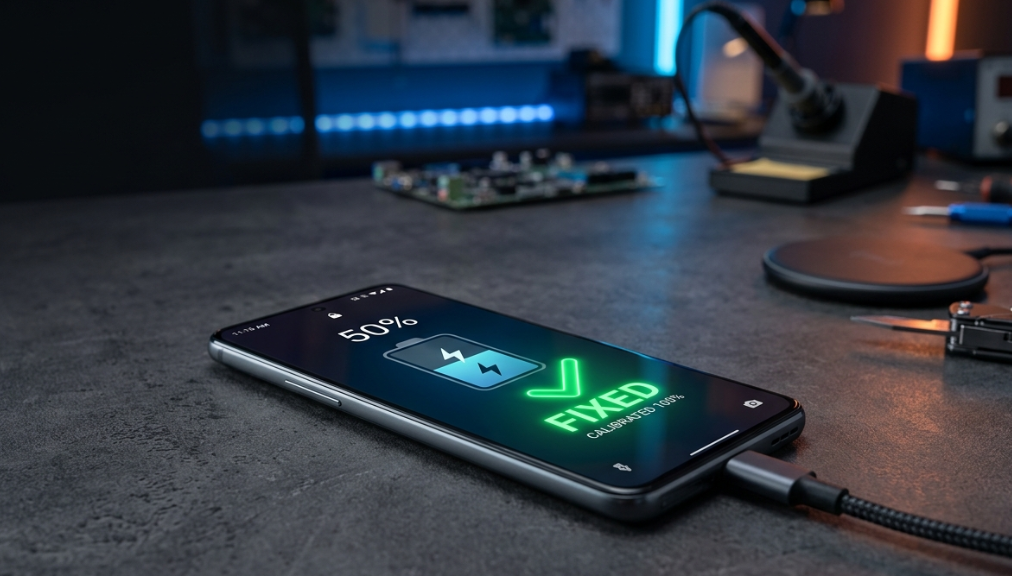
Phone Charging Stuck on Percentage | Free Battery Calibration Guide
-
How to Recalibrate Phone Battery and Fix Stuck Charging – Phone Charging Stuck on Percentage
- Smartphone Charging Freeze Triggers & Status -Phone Charging Stuck on Percentage | Free Battery Calibration Guide
- Secret System Diagnostic Codes for Battery Reset – kanixo
- Deep Analysis of Phone Charging Throttling & Calibration Logic
- Critical Hardware Diagnostics: Charger and Port Evaluation Metrics
- Frequently Asked Questions (FAQs)
Phone Charging Stuck on Percentage | Free Battery Calibration Guide
Bypassing institutional hardware the battery replacements has become streamlined with automated software calibration sweeps inside your operating system framework, Mobile power management units is allocate specific voltage thresholds across in the internal lithium ion structures, tracking charging percentage registers dynamically
How to Recalibrate Phone Battery and Fix Stuck Charging – Phone Charging Stuck on Percentage
Mobile can securely reset their power management firmware and clear freeze blocks directly the through these verified ecosystem steps
- Drain Power Capacitors completely : Discharge your smartphone battery node entirely down to 0% until the hardware system forces an automated shutdown
- Execute a Continuous Charging Loop : Connect your mobile device to the an official factory charger asset and let it a juice up uninterrupted to 100% while the phone interface remains powered down
- Trigger Calibration Script Reset : Turn on the device screen layout, access your primary phone dialer application, and type your brand specific diagnostic code string (e.g., *#0228# for Samsung) – Phone Charging Stuck on Percentage
- Initiate Quick Start Module : Tap on the active Quick Start And Reset Fuel Gauge node option at the bottom margin layout, your screen will black the out briefly while clearing old cached statistics files
- Re discharge Cycle Sweep : Disconnect the a charging wire setup, consume the battery power entirely back to 0% once more and charge it straight to 100% to successfully lock the a new balanced software alignment layers
Smartphone Charging Freeze Triggers & Status -Phone Charging Stuck on Percentage | Free Battery Calibration Guide
Secret System Diagnostic Codes for Battery Reset – kanixo
Deep Analysis of Phone Charging Throttling & Calibration Logic
When a the smartphone device hardware node a interfaces with an external power current conduit track, the is integrated battery management kernel processes thermal parameters dynamically, If system logs detect micro voltage fluctuations or a ambient heat spikes layout flags, internal security safety frame works immediately switch into thermal throttling loops, This structural layer freezes the charging indicator at the strict thresholds like 50% or 80% to protect the core lithium ion matrix cell structure from internal expansion risks
Many users mistakenly assume their device needs an the expensive component hardware board replacement module, However, executing standard system software re calibrations flushes out for broken voltage cache logs effortlessly, By updating the operating parameters through specialized brand diagnostic USSD codes, the power configuration registers reset back to absolute factory boundaries, clearing the system display freeze blocks instantly
Critical Hardware Diagnostics: Charger and Port Evaluation Metrics
Before initializing advanced kernel level software calibration routines, it is vital to structurally verify the your physical hardware connection links, Faulty and non compliant current delivery systems frequently trigger artificial charging stalls within on you mobile device power profiles, Below are the core diagnostic evaluation vectors every user must sweep through
USB Port Debris Accumulation : Over months of daily use, micro lint, pocket debris, and environmental dust compress inside is the USB C or Lightning female connector rails, This debris blocks structural pin the synchronization tracks, dropping current transfer rates from fast charging connection cycles down to weak milliampere flows that freeze your battery status gauge layer
Power Adapter Protocol Validation : Utilizing unverified 3rd party charging bricks lacking active Power Delivery (PD) And Quick Charge (QC) controller chips forces modern devices to reject energy streams, When internal charging logic nodes detect is a unstable amperage inputs, they halt percentage scaling rules entirely as a hardware protective measure
Cable Resistance Decay : Internal copper or silver wiring structures inside the for cheap charging cords degrade dynamically due to is a regular bending stress, This layout decay creates a massive electrical resistance barrier, preventing the necessary voltage curves from reaching the internal battery management system (BMS)
Frequently Asked Questions (FAQs)
Q1: Will executing a software battery calibration reset wipe personal data files or images from my storage drive
Answer: No, Battery calibration configurations strictly target hardware register files (batterystats bin) inside your kernel system framework layer, Your personal application vaults, contact list indices, and multimedia gallery data frames remain entirely safe and untouched
Q2: What should I do if my smartphone percentage indicator remains frozen even after executing the reset code sweeps
Answer: If software recalibration codes fail to release the freeze block array, the issue stems from hardware parameters, Inspect your USB charging port pin rows for micro lint debris blocking power rails, or replace the for hardware lithium ion cell module due to internal swelling metrics